
Getting real ROI from AI in logistics: Adrian Smith on FreightWaves Today
Ripple CEO Adrian Smith joined FreightWaves Today to talk tariffs, adapting to constant change, and how to deploy AI in logistics so the ROI stacks up.
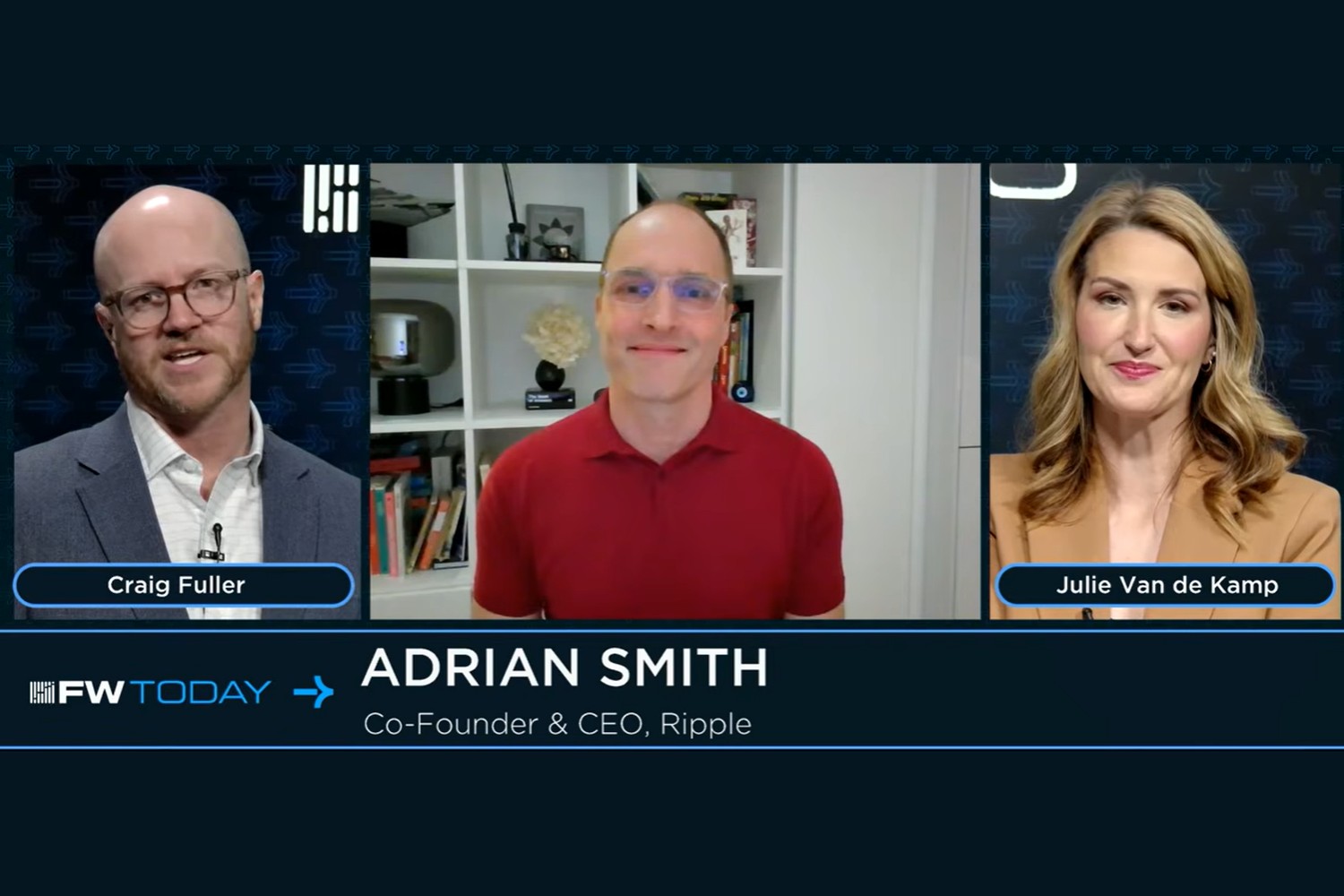
Ripple's Co-Founder and CEO, Adrian Smith, joined Craig Fuller and Julie Van de Kamp on FreightWaves Today on 9 November 2026. Just back from time with a customer in Dubai, he talked about tariffs, operating through disruption, why customs work is such a strong fit for AI, and how to deploy AI so the return on investment actually stacks up.
Watch the segment above, or read the key takeaways below. You can also watch Adrian's interview on FreightWaves TV or the full episode on YouTube.
1. Change is constant, so speed to adapt is what counts
Asked what the midterm results could mean for tariffs, Adrian pointed out that the past few years have had one consistent theme: change. Announced shifts don't always materialise, and unexpected ones arrive with little warning. Tariffs now apply across the globe, routes get disrupted, and operators in the Gulf are finding new ports and overland routes to keep cargo moving.
"It's about the speed to adapt, which is critical."
For logistics teams, the practical question is how quickly their operation can absorb a new rule, a new route or a new customer requirement without adding headcount.
2. Why customs work is such a strong fit for AI
Customs clearance, export documentation and inventory management combine high volumes of documents, detailed rules and many manual steps spread across several systems. That makes them ideal for AI, provided it is deployed against a clear picture of the work.
Adrian described the approach Ripple takes with customers: map the end-to-end workflow, identify where the manual steps and wasted effort sit, and design the future state around the points where AI will deliver the most value.
3. Match the model to the job
Adrian's most memorable point was about cost. Running the most powerful, most expensive AI model on every step of a workflow is like having your pizza delivered by helicopter. It arrives at about the same temperature and tastes the same. Then the invoice lands.
Frontier models earn their cost on critical steps where accuracy matters most. Routine admin steps, such as drafting a standard email, can run on lighter, cheaper models. Getting that routing right, and keeping token usage under control, is what turns an AI project into a business case that holds up.
"Sometimes it's not necessary to use AI. People just rush to AI, but then their token cost goes through the roof."
4. Protect and own your data
Adrian extended the analogy: you can also build your own pizza oven, so nobody gets hold of your grandmother's recipe. In AI terms, that means using open-weight models where it makes sense, deployed on your own infrastructure with your own data, so the information that makes your business distinctive stays under your control.
Looking ahead, he expects more logistics companies to treat their operational data as a strategic asset, and to look hard at incumbent software that is expensive or no longer fit for purpose.
5. Build around how each operation works
When Craig compared the role of AI partners to management consultancies, Adrian drew the distinction between a strategy and putting it to work. Every logistics operation runs differently, so Ripple sits down with each customer, maps their workflow and deploys a solution built around how they actually operate.
See how Ripple applies this


